How to Compare Soil Stabilization Methods for Different Foundation
Last updated: October 24, 2026
Quick answer: for most foundation problems, compare soil stabilization methods by failure mode, then by depth, load, moisture, and access. If the weak zone is shallow and reachable, a surface method may fit. If the weak soil is deeper, ground improvement or grouting may be the better path. This article on How to Compare Soil Stabilization Methods for Different Foundation Problems focuses on choosing the method that matches the soil problem at the depth where it starts.
I write on geotechnical and foundation subjects, so I look at methods the way a designer or contractor has to: by what they can actually change in the ground, not by how good they sound in isolation. The topic matters in 2026 as much as ever, because a wrong method can leave settlement in place even after the work is done.
Key takeaways
- Match the method to the failure mode, not to the headline material.
- Shallow settlement in accessible areas usually points toward compaction, geotextiles, or shallow lime/cement treatment; if the case is unclear, consult a geotechnical professional and use FHWA ground improvement guidance.
- Deep soft ground often pushes the decision toward deep soil mixing or grouting, because surface work will not reach the weak layer.
- Moisture matters as much as soil type; wet clay and saturated fines can make compaction ineffective and can narrow the field to chemical or deep methods.
- Equipment access can decide the job before soil type does.
- A method that disturbs less is not always the safest for the foundation; the choice should still be checked against the load path and a geotechnical design.
- The best method is usually the one that matches the soil failure mode, treatment depth, and construction constraints, but an engineer should confirm that fit on site.
What actually decides the comparison?
The best method is usually the one that matches the soil failure mode, treatment depth, and construction constraints, but the final call should be made with site-specific geotechnical input. If the soil is weak only in the top 0.3 to 1 m, a surface method can win. If the weak zone extends several metres down, the comparison shifts immediately toward deep methods.
The core question is not “Which method is strongest?” It is “What is failing, how deep is it failing, and what can the site tolerate?” That is where soil stabilization methods separate. Lime stabilization changes plastic clay by reducing plasticity and improving workability. Cement stabilization raises strength in many soils, but it is less forgiving when moisture is excessive or mixing is inconsistent. Mechanical compaction works only where densification is possible. Deep soil mixing creates in-place columns or panels and is aimed at deeper weak ground. Geotextiles improve separation, reinforcement, and load distribution, but they do not make soil itself stronger in the same way. Grouting can target voids, fissures, and localized weakness, but it is more specialized and less straightforward over broad areas.
For comparison, use the same six filters every time: soil type, moisture, depth, load, access, and disruption. If one method fails two of those six, it is usually the wrong candidate.
This is the practical rule set that documents like the Federal Highway Administration ground improvement guidance and the U.S. Army Corps of Engineers’ soil stabilization references are built around, even when they use different terminology. The engineering logic is the same: treat the cause, not the symptom, and verify the solution with professional judgment.
The honest side-by-side for foundation problems
Surface work wins for shallow, accessible problems; deep treatment wins when the weak layer sits below the reach of rollers or shallow mixing. If the soil profile is not clear, consult a geotechnical engineer before choosing. Here is the comparison that actually changes the decision.
| Criteria | Lime stabilization | Cement stabilization | Winner for this condition |
|---|---|---|---|
| Soil type | Best known for plastic clays and some silts | Broadly useful in many soils, especially when strength gain is needed | Lime for high-plasticity clay; cement for mixed or granular soils |
| Moisture sensitivity | Can help wet clay, but needs workable mixing conditions | Can be defeated by excess water and poor blending | Lime in wet, clay-rich soils |
| Depth of treatment | Usually shallow to moderate, depending on equipment and project | Usually shallow to moderate | Neither for deep weak layers |
| Load requirement | Good when the goal is subgrade improvement, not major deep bearing correction | Better when higher strength is needed near the surface | Cement for higher near-surface load demands |
| Equipment access | Standard spreading and mixing equipment, but site must be reachable | Similar access needs, often similar field footprint | Tie for open sites |
| Disturbance | Moderate; requires mixing and curing time | Moderate; also requires mixing and curing time | Tie |
| Curing / strength gain | Slower initial improvement, with chemistry depending on soil and lime reaction | Typically faster strength development than lime in many mixes | Cement for quicker turnaround |
| Freeze-thaw / durability concerns | Can improve soil behavior, but design matters | Often chosen when a harder, more durable matrix is needed | Cement where durability is the priority |
| Cost driver | Material amount and reworking poor soils | Cement content and quality control | Lime when clay response is strong; cement when strength is the target |
| Best fit for foundation problem | Expansive, plastic soil near grade | Weak near-surface soil needing a firmer base | Depends on failure mode, not brand preference |
That table hides one crucial point: neither lime nor cement is the answer for a foundation that is failing because the weak layer is too deep. If the settlement source sits below the treated zone, both methods can look good on paper and still miss the problem in the ground.
When lime stabilization wins
Lime stabilization wins when the soil is plastic clay and the problem is moisture-driven softening, shrink-swell behavior, or a weak subgrade near the foundation. That is the method to favor when the soil is sticky, hard to compact, and unstable after rain.
The reason is chemical and practical. Lime changes the soil’s behavior, which is why it is often used on clay-rich subgrades before pavement or shallow foundation support layers are built. In plain terms, it makes bad clay less troublesome to work with. That matters when the failure is not a void or a deep soft lens, but a near-surface mass of high-plasticity soil that moves with water.
The weakness is just as clear. Lime is not a cure for deep bearing failure. It does not replace piles, caissons, or deep ground improvement when the weak zone is several metres down. It also needs proper mixing and cure time; if the site needs immediate loading, the schedule can be tight. It is also less appealing when the soil is not clay-rich enough for the reaction to make sense.
Use lime when the site is accessible, the weak soil is shallow, and the key problem is clay behavior rather than pure strength. Skip it when the foundation is settling because of deep compressible fill, organic soil, or a voided zone below the treatment depth.
When cement stabilization wins
Cement stabilization wins when the site needs a stronger near-surface bearing layer and the soil can be mixed uniformly. It is the better pick for many projects where the goal is a stiffer base under a slab, footing, or pavement edge, especially when the soil is not dominated by expansive clay.
Cement’s advantage is straightforward: it can produce a harder, stronger stabilized mass than chemical modification alone, which matters when load demands are higher or when the project needs a firm working platform. In many foundation-adjacent jobs, that makes cement the more direct answer. If the issue is a soft upper layer under a structure with moderate loading, cement can be a cleaner fit.
Its downside is also practical. Cement is less forgiving of poor mixing and excess water, and it is not the best choice for every clay problem. In very wet soil, the blend can be hard to control. In deep problems, it still only helps where it is placed. If the load-bearing issue is below the treated lift, a cement-treated top layer can create a false sense of security.
Cement stabilization suits projects that need stronger surface support, tighter control of near-surface deformation, and a material response that is easier to frame as “build a better layer.” It is not the first choice for broad, deep settlement problems or for highly plastic clay that needs behavior change before strength gain.
Mechanical compaction, geotextiles, grouting, and deep soil mixing are not interchangeable
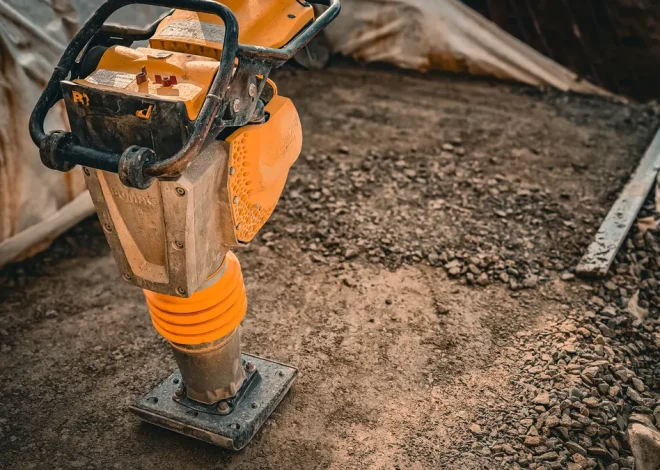
Mechanical compaction wins only when the soil is densifiable and the weak zone is shallow enough to reach. It is the simplest and least chemically complex option, but it fails fast if the soil is too wet, too soft, or too deep. If a roller cannot rearrange the particles effectively, compaction is not a solution; it is just repeated traffic.
Geotextiles win when the problem is load distribution, separation, or reinforcement over soft subgrade. They are useful as a support layer, not as a cure for poor soil strength. A geotextile can stop aggregate from punching into weak ground and can help spread loads, but it does not remove settlement risk if the underlying soil is highly compressible.
Grouting wins when weakness is localized, when voids need filling, or when targeted ground improvement is required around existing structures. It is one of the few methods that can be very precise, which makes it valuable for constrained sites. The trade-off is cost, setup complexity, and the need for a well-defined target zone. Grouting is rarely the first answer for broad shallow improvement.
Deep soil mixing wins when the weak zone is too deep for surface methods and the site can support specialized equipment. It is the right comparison point for soft, compressible ground beneath heavier loads, because it changes the soil mass at depth rather than only the top lift. Its weakness is the footprint, equipment demands, and higher project complexity. If access is tight or the weak soil is shallow, deep mixing can be more method than the job needs.
If the foundation problem is shallow and open, compaction or geotextiles may be enough. If the problem is deep, grouting or deep soil mixing moves to the front of the line.
What to do first, step by step
First, identify the failure mode from the symptoms and site data. Settlement, heave, pumping, cracking, or loss of bearing each points to a different soil problem. A method choice without this step is guesswork.
Second, define the treatment depth. If the weak layer is within the top 1 m, surface methods remain in play. If it lies below that, the comparison shifts toward deep soil mixing or grouting. A method that never reaches the weak layer has already lost.
Third, match the method to the soil type and moisture condition. Plastic clay often pushes toward lime; many strength-focused near-surface jobs push toward cement; densifiable soils favor compaction; deep or localized defects may point to grouting. Wet soil narrows the field fast.
Fourth, check the load requirement. A light slab does not need the same treatment as a heavily loaded footing or a support zone for equipment. Higher load demand usually raises the value of stronger in-place treatment or deeper intervention.
Fifth, test equipment access and construction disruption. If large mixers, rigs, or grouting trucks cannot reach the site, that method is off the table regardless of its technical appeal. If the work must happen beside an existing structure, disturbance may matter as much as strength.
Sixth, compare cure time and sequencing. Lime and cement need time to develop usable performance. A project that needs immediate load transfer may need a different method or a staged plan.
If those six steps do not point to one clear option, the site likely needs a geotechnical design rather than a generic stabilization choice.
When to reconsider the whole choice
Reconsider the entire choice when the problem is not just weak soil but an unknown subsurface condition. If the foundation has repeated movement, water intrusion, sinkhole-like behavior, or highly variable fill, no stabilization method should be picked before subsurface investigation fills the gap.
The choice also changes when the site is constrained by existing structures, utilities, or sensitive operations. Grouting may become the only practical option where large equipment cannot move freely. Deep soil mixing may become unrealistic where overhead clearance is poor or vibration tolerance is low. Mechanical compaction can be ruled out where the soil is too saturated to respond.
The same is true when the goal is not to strengthen soil but to fix drainage, erosion, or groundwater pressure. Soil stabilization methods do not solve every foundation problem. A project with water-driven loss of support may need drainage correction first, because stabilizing the wrong layer leaves the root cause untouched.
A simple rule helps: if you do not know the depth, the moisture condition, and the load path, do not choose the method yet. Get those three facts first.
The verdict: which method to choose and why
Choose lime stabilization if the foundation problem is shallow, clay-rich, and moisture-sensitive, and the goal is to make plastic soil behave better near grade. Choose cement stabilization if the near-surface soil needs a firmer, stronger base and the mix can be controlled. Neither is enough if the weak layer is deep, the settlement source is unknown, or the site needs targeted treatment below the reach of shallow methods; in those cases, consult a geotechnical engineer.
The comparison is simpler than it first looks: lime changes troublesome clay, cement builds stronger near-surface soil, compaction densifies only where the soil will respond, geotextiles distribute load, grouting treats localized defects, and deep soil mixing reaches what the others cannot. The right pick follows the failure mode, not the method name.
Which soil stabilization method is best for clay?
Lime stabilization is often the first method to compare for plastic clay because it changes the soil’s behavior, not just its density. That said, cement may still win if the design needs higher near-surface strength rather than plasticity reduction. If the clay problem is deep or the soil is extremely wet, neither shallow option may be enough.
Which method works for shallow weak soil?
Mechanical compaction, lime stabilization, cement stabilization, and geotextiles can all work for shallow weak soil, but the winner depends on what is actually failing. Compaction fits densifiable soils, lime fits plastic clay, cement fits near-surface strength needs, and geotextiles help spread loads. If the weak zone is only a few hundred millimetres deep, deep mixing is usually more than is needed.
Which method is least disruptive to a site?
Geotextiles are often the least disruptive because they can improve separation and load distribution with relatively little excavation compared with deep methods. Grouting can also be low disturbance when the target is localized. Both are better than broad excavation or deep mixing when the site has limited access or nearby structures, though neither replaces a true strength fix in every case.
Drafted with AI; not yet reviewed by a person.