How Soil Stabilization Changes Bearing Capacity
Last updated: October 21, 2026
Key Takeaways
- Bearing capacity is the safe soil pressure used in design after failure and settlement checks.
- Stabilization can improve load support by increasing strength, stiffness, and uniformity where the foundation bears.
- The best gains come from methods that treat the stress zone, not only the surface.
- In practice, testing and foundation type control the final allowable value.
Soil stabilization changes bearing capacity by making weak ground resist higher stress without punching, shearing, or excessive rutting. Quick answer: it can raise the allowable bearing capacity, but the exact increase depends on the soil, the treatment depth, and the test results. In How Soil Stabilization Changes Bearing Capacity and Load Support, the basic point is that treated soil can support more load when its strength, stiffness, and load transfer behavior improve, but a foundation designer should confirm the value with site-specific testing or a geotechnical professional.
What bearing capacity means on treated ground
Bearing capacity is the maximum pressure soil can carry before it fails or deforms enough to threaten a foundation, but a geotechnical engineer should confirm the design value for the site. On untreated ground, that limit may be set by shear failure in a soft clay, crushing in loose sand, or a mix of both under a spread footing or slab-on-grade.
Stabilization changes the ground below the footing or slab so the load spreads through a stronger zone instead of concentrating in a weak layer. The key idea is not just “harder soil.” It is a different stress path. A treated subgrade can take higher contact pressure because it resists shear better and distributes load over a wider area, though a professional should verify that the treated depth is enough.
Engineers usually separate ultimate bearing capacity from allowable bearing capacity. Ultimate capacity is the theoretical failure point. Allowable bearing capacity is the design value after applying a factor of safety and considering settlement limits. A soil treatment may raise both, but the design increase is often smaller than the raw strength gain because the allowable value still has to protect the structure.
That is why the same stabilization method can look impressive in a lab and modest in a design. A lime-treated clay, for example, may show a strong increase in unconfined compressive strength, yet the foundation design may only credit part of that gain because moisture, construction control, and long-term variability matter. The American Concrete Institute’s guidance for slabs and the Canadian Foundation Engineering Manual both treat subgrade support as a design input, not a guess.
This section is not about settlement troubleshooting. It is about the basic mechanism: stabilization changes the soil’s resistance to bearing pressure, which changes the value you can use for a footing, mat, or slab. The hub on foundation performance on weak or treated soil belongs alongside this page, because bearing capacity is only one piece of the broader performance picture. See also our related page on soil stabilization methods, foundation settlement, and slab-on-grade design.
How stabilization improves load support
Stabilization improves load support by increasing soil strength, stiffness, and uniformity at the depth where the foundation actually pushes down. The improvement can come from chemical bonding, particle interlock, pore reduction, or reinforcement, depending on the method.
A lime-treated expansive clay behaves differently from a cement-treated silty soil and differently again from a geogrid-reinforced aggregate platform. In each case, the treated zone either carries more stress itself or spreads that stress to a larger footprint before it reaches a weaker layer below. That load transfer matters as much as the raw strength number.
The practical result is a higher allowable bearing capacity for the same footing size, or the same capacity with a smaller footing. For a spread footing, the designer may be able to reduce footing width if the treated subgrade gives enough margin. For a slab-on-grade, the benefit may show up as lower stress on the subgrade and less need for thickened edges or deepened pads.
Stabilization also changes failure mode. Untreated soil may fail in a narrow shear wedge directly below the footing. Treated soil can force the stress bulb to widen and the plastic zone to move deeper before collapse starts. That does not mean the soil is “fixed forever.” It means the footing sees a stiffer, stronger support platform.
A simple way to think about it:
- The footing applies load over its base area.
- The treated zone spreads that load laterally and resists shear.
- The stress reaching the native soil is lower and less concentrated.
- The foundation can carry more load before bearing failure governs.
This is why stabilization is often used where the native subgrade is too weak for the planned foundation pressure but not so poor that deep foundations are automatically required. It is a middle path between doing nothing and rebuilding the entire support system.
Which stabilization methods raise bearing capacity most
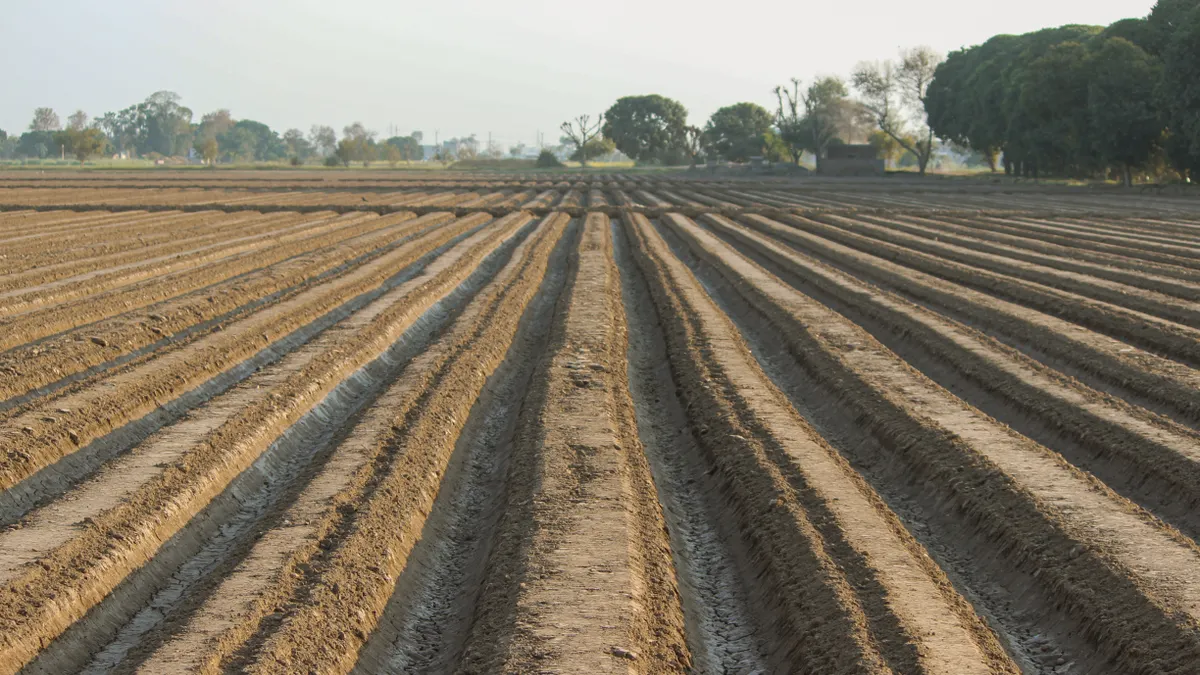
The methods that raise bearing capacity most are the ones that improve the soil at the stress zone that matters, not just at the surface. That often means chemical stabilization for fine-grained soils and reinforcement or replacement for granular subgrades.
Soil type controls the choice. Clay, silt, sand, and organic soil do not react the same way. Lime works well on many plastic clays because it changes moisture sensitivity and can build a cemented matrix over time. Cement stabilization is common when a firmer, faster-strengthening layer is needed. Fly ash or other pozzolanic blends may be used where the chemistry suits the soil. Geosynthetics do not “stabilize” by chemistry, but they can raise load support by confining the aggregate layer and improving load distribution.
For design, the goal is not the strongest possible lab specimen. The goal is enough bearing capacity at the foundation level with predictable field performance. A 150 mm to 300 mm treated base layer may help a slab-on-grade by creating a working platform, while a deeper treated zone may be needed under a footing if the weak layer is thick. Thin treatment over very soft material can still leave a failure plane below the treated depth.
That limitation is easy to miss. A crust on top of weak soil may feel firm during construction and still give poor bearing support once the structure loads it. If the treated layer is too shallow, the stress bulb can punch through it and mobilize the untreated soil below. The foundation then behaves more like it is sitting on a cap than on improved ground.
The relevant standards and references are method-specific. ASTM D4609 covers evaluating the engineering properties of soil-lime mixtures, while ASTM D558 and related methods are used for stabilized soil mixtures in lab control. Those standards matter because the bearing gain depends on the mix design and curing condition, not just the binder name.
How do I know the allowable bearing capacity changed?
The allowable bearing capacity changes when the treated subgrade produces a higher verified strength and stiffness than the untreated soil, and the design uses that higher value with appropriate safety factors. In practice, that means testing, correlation, and a careful check of the foundation type.
The core procedure usually looks like this:
- Define the loaded area, such as a spread footing, mat, or slab-on-grade, so the design stress is known in kPa or psf.
- Characterize the native soil with classification and strength data, such as Atterberg limits, moisture content, CBR, UCS, or plate load results, because the untreated baseline controls the comparison.
- Select a stabilization approach matched to the soil type and depth of treatment, such as lime for plastic clay or cement-treated aggregate for a support layer 150 mm to 300 mm thick.
- Verify the treated material with lab or field testing after curing, then convert the measured improvement into an allowable bearing value using the project’s factor of safety and settlement criteria.
- Check whether the improved layer is thick enough to keep the stress bulb inside the treated zone; if not, the design still has a weak layer problem below the surface.
The process above is where many generic articles get vague. Bearing capacity is not assigned by guesswork. It is tied to the actual treated profile, the moisture condition at construction, and the load path beneath the footing. A design that assumes a 2x strength increase without showing how the subgrade was tested is not a design; it is a hope.
The most common field check for improved support is a plate load test or a modulus-based verification, but the method depends on the project and the engineer’s standard of practice. A lab mix design alone does not tell you what the site will support under a slab edge or column footing. Construction moisture, compaction energy, and curing time all influence the final allowable value. For reference, ASTM D1196/D1196M covers nonrepetitive static plate load tests, and ASTM D4718 covers evaluating field strength from stabilized soils.
What foundation assumptions stabilization changes, and what it does not
Stabilization changes the foundation assumptions about subgrade stiffness, bearing resistance, and the size of the support zone, but it does not erase every design risk. It changes the numbers engineers can reasonably use; it does not turn weak ground into rock.
For a spread footing, the main assumption that changes is the pressure the soil can accept without shear failure or unacceptable deformation. That can allow a wider range of footing sizes or shallower embedment. For a slab-on-grade, stabilization can improve the uniformity of support, which affects edge response, curling behavior, and local punching risk under concentrated loads.
A common mistake is to treat stabilized soil as if it has one permanent strength value. It does not. Moisture, curing, depth variability, and workmanship all matter. A lime-treated layer under a commercial slab may perform very differently if it is compacted at the wrong water content or if the treatment depth varies from 150 mm in one area to 75 mm in another. That inconsistency costs bearing capacity because the weak spot controls the system.
Another mistake is to assume that better bearing capacity automatically means the foundation can ignore settlement. It cannot. Bearing capacity and settlement are related but not identical. A soil can have enough capacity to avoid shear failure and still deflect more than the structure can tolerate. This article is not the place for settlement repair, but the distinction matters because many design errors come from mixing the two.
This is also where stabilization is the wrong tool. If the load is very large, the weak layer is very deep, or the project needs a highly predictable deep support system, a shallow treatment may not be enough. In those cases, a designer may need a more substantial foundation solution instead of counting on near-surface improvement. A shallow treated mat under a heavily loaded column line can be a poor bet if the improved zone does not capture the full stress bulb.
When soil stabilization is enough, and when it is not
Soil stabilization is enough when the weak soil is shallow, the loading is moderate, and the improvement can be proven at the foundation depth with a treated layer of sufficient thickness. It is not enough when the treated zone is too thin, the soil is highly variable, or the structure needs capacity beyond what a near-surface improvement can reliably deliver.
That judgment is usually made before construction, not after. If the planned slab-on-grade only needs a firmer subgrade to carry warehouse traffic, a stabilized working platform may solve the bearing problem. If the project is a heavily loaded spread footing over a thick soft deposit, the same treatment may be only a partial fix.
Improvement limits are real. Soil stabilization can raise bearing capacity, but only within the bounds of the soil chemistry, treatment depth, and construction control. The treated zone may also be sensitive to water if it is not properly designed for the site conditions. A support layer that looks strong in dry weather can weaken if the moisture regime changes and the mix was not suited to that environment.
For that reason, the best reading of stabilization is not “this soil is now strong.” It is “this soil can now be counted on for a higher, measured support value within a defined set of conditions.” That is the language foundation design uses, and it is the only language that keeps allowable bearing capacity honest.
The practical takeaway for designing on stabilized soil
The practical takeaway is that stabilization raises bearing capacity by making the foundation soil stronger, stiffer, and better able to spread load, but the usable gain depends on depth, soil type, and verification. A slab-on-grade may benefit from a treated support layer, while a spread footing may need a deeper or more carefully checked treated zone to justify a higher allowable bearing value.
The smartest design move is to ask a simple question: does the stabilized zone fully cover the stress bulb under the planned load? If the answer is no, the treatment may help, but it should not be treated as the controlling support layer. If the answer is yes and the testing supports the improvement, the foundation can often be designed with a higher and more defensible bearing capacity.
That is the clean distinction this topic lives on. Stabilization is not a cure-all, and it is not just a construction convenience. It is a way of changing the support mechanics under the foundation so the allowable bearing capacity can rise in a way the design can defend.
For the broader context of how this fits into foundation performance on weak or treated soil, the hub page should sit beside this one.
What bearing capacity is in simple terms
Bearing capacity is how much pressure soil can take before it fails under a load. On a foundation, that means the soil under a spread footing or slab-on-grade must resist the weight without shearing, crushing, or deforming past the design limit. The allowable value is the safe number used in design, not the theoretical maximum.
How does stabilization improve load support?
Stabilization improves load support by strengthening the subgrade and helping it spread the load over a wider area. That reduces stress concentration under the foundation and raises the pressure the soil can carry safely. The effect depends on the treatment depth, the soil type, and how well the treated layer was verified after construction.
Does every soil type respond the same way?
No, every soil type responds differently. Clay, silt, sand, and organic soils do not gain bearing capacity from the same method at the same rate. Lime often suits plastic clays, cement-based treatment may suit other fine-grained soils, and geosynthetics help granular layers by improving confinement and load transfer.
Drafted with AI; not yet reviewed by a person.