What Causes Expansive Clay Soil Under Foundations and How It Behaves
Last updated: September 10, 2026
Key Takeaways
- Problem sign: cracks that widen over 2 to 3 months or appear in multiple areas.
- Surface dryness does not tell you what the soil is doing 2 to 6 feet down, which is often where the active zone matters.
- Look for water pooling within 3 to 10 feet of the foundation, splash marks, or downspouts dumping near the wall.
- A practical target is roughly 6 inches of fall over the first 10 feet away from the foundation, where site conditions allow.
Expansive clay soil under foundations moves because it takes on water, swells, then shrinks as it dries; that cycle can lift, tilt, and crack foundations. Seeing wall cracks, sticky soil, or doors that suddenly bind? Then the soil is already sending a message. Before guessing, speak with a qualified foundation or geotechnical professional about your own situation.
Who this applies to, and what I’m assuming you already know
Homeowners, buyers, and renters all run into this when a slab, crawlspace, or basement wall starts acting differently after wet and dry spells. I’m assuming you already know the obvious signs of settlement—cracks, sloping floors, gaps at trim—and want the mechanism, not a sales pitch. Also, this is not a medical issue you can self-diagnose. It is a building-soil problem, and it can affect safety and value, so a qualified foundation or geotechnical professional is the right person when cracks are widening, floors are heaving, or the movement is ongoing.
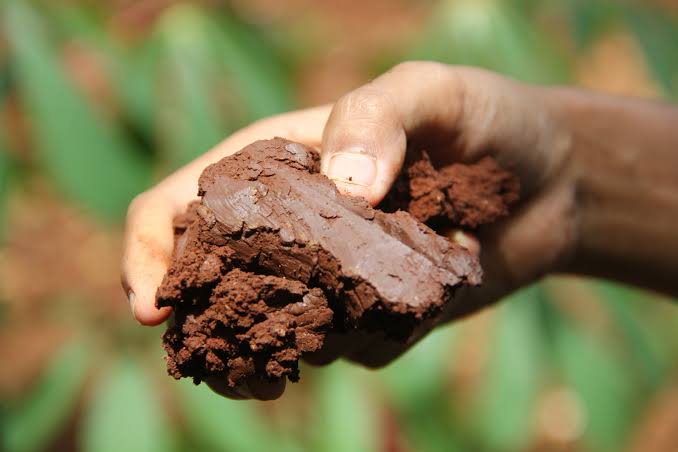
The real question is not “Is the house built badly?” It is “Is the soil changing volume enough to move the structure?” Big difference. Expansive clay does not act like sand or gravel. Clay particles are tiny and plate-shaped; they hold water on their surfaces and in the spaces between particles. When moisture content rises, the soil can swell. When it falls, the soil can shrink and leave voids. That back-and-forth is the whole problem.
A few terms help here. “Plasticity” means the soil can be molded when wet. “Plasticity index” is a lab measure of how much that clay can change shape with moisture. “Active zone” is the depth of soil that wets and dries enough to move. On many sites that zone is only the upper few feet, but the depth varies with climate, vegetation, drainage, and the season. So one part of a lot may move more than another.
I would not treat every crack as evidence of expansive clay; if cracks are widening, recurring, or affecting doors and floors, consult a qualified foundation or geotechnical professional. Concrete shrinks as it cures, and soil can settle for many reasons. Plumbing leaks, poor drainage, tree roots, and grade changes can all push a clay problem into motion, but they are not the same thing as the clay itself. The clue is the pattern: movement that tracks moisture change, not one isolated crack from one event. The U.S. Geological Survey says expansive soils can cause millions of dollars in damage each year in the United States, which is why pattern recognition matters. USGS
PubMed does not have a clean direct literature count for this exact building-soil question, so I am not using those figures as evidence for the soil mechanics here. For the structural side, the practical rule is the same: if the movement is progressive, visible, or affecting doors, windows, or load-bearing elements, get a qualified opinion rather than guessing.
Why clay shrinks and swells under a house
Expansive clay changes volume because its mineral structure attracts water. Clay minerals such as smectite, including montmorillonite, have a layered lattice that can hold water between sheets. Once those layers hydrate, the soil mass expands. Dry them out, and the layers pull closer together. Not subtle. In the right setting, that pressure is enough to push or pull on footings, slabs, and grade beams.
The key point: the soil does not move evenly. Moisture enters from the top, from the edges of a slab, along utility trenches, and around leaking pipes. It can leave through evapotranspiration, which is the water loss caused by soil and plants together, especially near trees and hot, dry surfaces. That means the perimeter of a house often behaves differently from the center. Corners are notorious because they are exposed on two sides and can dry faster.
Silt and sand behave differently because they do not swell in the same way. That is why an “expansive soil” report usually points to clay mineralogy, not just the word clay itself. Not every clay is highly expansive, but when the soil contains enough active clay minerals and the moisture swings are large enough, the foundation sees movement. Bigger seasonal moisture change, bigger trouble.
One thing people miss: expansive clay can create both heave and settlement. Heave is upward movement from swelling. Settlement is downward movement after drying, loss of support, or consolidation. A house can show both at different times. A slab might lift near one corner after a wet season and drop near a plumbing leak later. That is why a simple “it sank” explanation often misses the real pattern.
Age does not protect you. Soil, drainage, and the depth of the active zone matter more than the calendar. A newer foundation on reactive clay can move sooner than an older one on stable ground if the drainage and moisture control are poor. Cosmetic repairs alone often fail for the same reason—they hide the crack, but the soil cycle keeps going underneath.
How does expansive clay behave under foundations?
Think of expansive clay as a moisture-driven spring: load it when it is wet and soft, then let it dry and it contracts unevenly. The house rides on top of that changing base, which is why the damage often looks random but is actually patterned. Shift the wetting pattern by only a few feet, and the foundation can respond. Ugly little domino effect.
The movement usually starts where water enters or leaves first. Roof runoff concentrated at the eaves, short downspouts, poor site grading, and irrigation near the foundation can raise moisture at the edge. A buried leak can saturate one area beneath a slab. A mature tree can pull moisture from one side of the house more than the other. The result is differential movement, which means one portion moves differently from another. Differential movement is the kind that cracks buildings.
You can think of the soil response in three layers of behavior. First is the short-term surface change after rain or irrigation. Second is the seasonal cycle, often obvious after prolonged wet or dry periods. Third is the long-term change in the site from landscaping, plumbing, or drainage alterations. A house that looked fine for years can start moving after a single utility repair because the moisture pattern shifted.
The problem is not limited to cracks in slab-on-grade homes. Crawlspace piers can shift as pads or footings ride on active clay. Basement walls can bow if exterior moisture creates lateral pressure while the soil expands. Interior partitions can show hairline cracks before the structure itself looks obviously distressed. Doors and windows may stick because the frame is out of square, not because the hardware is bad. FEMA notes that lateral soil pressure and poor drainage are among the common causes of basement wall distress, so wall movement deserves a professional look. FEMA
A generic article often skips the timing, but timing is the clue. If the movement tracks wet seasons, irrigation changes, or plumbing leaks, expansive clay is a candidate. If the movement is sudden after excavation or a burst pipe, soil softening may be part of it. If the wall crack keeps lengthening across multiple seasons, that is not something I would shrug off as “normal settling.”
What should you check before assuming the soil is the problem?
Check moisture patterns, drainage, and the movement pattern before blaming expansive clay. I’d start with what you can see without tools, then move to the things that need a professional if the signs are active. The goal is to separate a soil-volume problem from simple cosmetic cracking.
- Walk the perimeter after a rain of at least 0.5 inch. Look for water pooling within 3 to 10 feet of the foundation, splash marks, or downspouts dumping near the wall. Verify that water is moving away from the house. Problem sign: standing water, soggy soil, or erosion at corners.
- Check the grade for slope away from the house. A practical target is roughly 6 inches of fall over the first 10 feet away from the foundation, where site conditions allow. Verify that soil does not pitch back toward the wall. Problem sign: soil or mulch buried against siding or slab edges.
- Note where cracks appear and how they run. Map them on a sketch. Measure width with a ruler or crack gauge at the widest point. Verify whether they are at corners, above windows, or near slab joints. Problem sign: cracks that widen over 2 to 3 months or appear in multiple areas.
- Test doors and windows for seasonal change. Open and close the same units every few weeks. Verify whether sticking follows wet or dry periods. Problem sign: a new pattern of binding or gaps that changes with weather.
- Look for plumbing clues. Higher water bills, damp flooring, or warm spots in a slab can point to leaks. Verify that plumbing is not adding water to the active zone. Problem sign: unexplained dampness, musty odors, or repeated localized swelling.
- Watch trees and irrigation. Measure how close large shrubs or trees are to the foundation and whether sprinklers hit the soil near the wall. Verify that root-zone drying or overspray is not one-sided. Problem sign: one side of the house moves more than the other.
- Ask for a geotechnical or structural opinion if movement is progressive. A qualified professional can evaluate soil classification, moisture conditions, and footing behavior. Verify whether the observed pattern fits expansive soil or another cause. Problem sign: visible heave, sloping floors, or cracks in load-bearing elements.
This is where a lot of people go wrong: they repair the crack before they understand the moisture source. That may make the wall look better for a while, but it does not answer the soil question. If the house is still moving, the repair is just cosmetic.
What are the warning signs that mean I should stop guessing?
Stop guessing when the movement is active, structural, or tied to moisture you cannot control. On a house, the wrong move is usually to assume the crack is harmless and wait months.
Cracks are widening or recurring after patching: that suggests ongoing movement, not a one-time shrinkage crack — get a structural evaluation.
Floors are visibly sloping or doors keep binding in the same season: that points to differential foundation movement — have the foundation and soil conditions reviewed.
There is a leak under a slab or near a footing: added water can keep reactive clay swelling — stop the leak and get qualified input before any cosmetic repair.
One corner is heaving while another side is dropping: that is classic differential behavior — the house needs an assessment, not guesswork.
Basement walls are bowing, bulging, or showing stair-step cracking in masonry: lateral pressure may be part of the problem, so consult a qualified foundation or geotechnical professional rather than treating it as a simple patch job.
You see recent excavation, major landscaping, or drainage changes near the foundation: the moisture regime has changed — wait for professional review before assuming the soil will settle back.
These are not situations where a homeowner “tries a fix and watches.” They are situations where time can make the damage worse. I would especially be cautious if movement affects load-bearing walls, column supports, or the slab under mechanical equipment. A patch over an expanding crack can trap the symptom while the cause keeps working.
If you are uncertain, the safe move is to document the cracks, note dates and weather, and get a qualified opinion. That does not mean every crack needs expensive work. It means active movement deserves more than a hunch.
The mistakes people make with expansive clay, and what they cost
The first mistake is assuming all clay is the same. It is not. Some clays are mildly reactive; others are highly expansive. The consequence is overreaction in one case and underreaction in the other. The better alternative is to treat clay behavior as site-specific and moisture-dependent; if the crack pattern is progressing, consult a qualified foundation or geotechnical professional.
The second mistake is watering one side of the house “to balance” movement without understanding the site. Inconsistent watering can make one area swell while another dries. The consequence is more differential movement, not less. The better alternative is to keep moisture changes as even as the site allows and avoid extreme wet-dry cycles near the foundation.
The third mistake is ignoring drainage because the yard looks dry on top. Surface dryness does not tell you what the soil is doing 2 to 6 feet down, which is often where the active zone matters. The consequence is hidden swelling below grade. The better alternative is to move roof runoff well away from the foundation and keep grade from trapping water. InterNACHI notes that poor drainage and runoff management are common contributors to foundation distress. InterNACHI
The fourth mistake is treating plumbing leaks as minor because the floor “only feels soft”; if you suspect a leak, consult a licensed plumber or foundation professional. A small leak can feed reactive clay for weeks. The consequence is localized heave or settlement that looks mysterious later. The better alternative is to stop the leak and have the affected area evaluated.
The fifth mistake is cosmetic patching before measurement. If cracks are sealed without tracking width, location, and timing, you lose the evidence that tells you whether the problem is stable. The consequence is delay. The better alternative is to document first, repair later.
The sixth mistake is assuming a house built on expansive clay is doomed. That is too fatalistic. Many foundations perform acceptably on reactive soils when drainage, footing design, and moisture control are right. The consequence of panic is wasted money. The better alternative is a measured response based on the actual movement pattern.
What changes when the site is not “standard”?
Standard guidance changes when the moisture pattern is unusual, the structure is heavy, or the site is already disturbed. Expansive clay under a single-story slab behaves differently from clay under a basement wall or a pier-and-beam house. Soil movement under a 1,500-square-foot slab is not the same as under a multi-level structure with mixed foundation types.
If the site has mature trees close to the foundation, the active zone can deepen and become asymmetric because roots draw moisture from farther down than you might expect. That can change how quickly one side dries. If there was recent excavation for utilities, the backfill can behave differently from undisturbed native clay for years. If there is fill soil, the fill itself may settle in addition to any clay movement.
Cold climates add another layer. Freezing and thawing can complicate what people think is purely expansive-clay damage. I would not label every winter crack as clay behavior; if cracks change with freeze-thaw cycles, consult a qualified professional before deciding it is expansive soil. The pattern needs to be checked against climate, drainage, and timing. In arid climates, long dry periods followed by a big rain can produce more dramatic heave than people expect because the clay had time to shrink deeply first.
This is also where professional judgment matters