How to Tell If Your Soil Needs Stabilization Before Building a Foundation
Last updated: September 10, 2026
Key Takeaways
- Use a hand auger, shovel, or steel rod to at least 24 inches if conditions allow.
- If the lot falls toward the foundation area, note the grade change over the first 10 feet.
- The easy-to-miss problems are the ones hidden below the top 6 to 12 inches.
- Walk the lot within 24 hours and again after 48 hours, and mark where water ponds, where runoff cuts channels, and where the ground stays dark.
Moisture, fill, clay behavior, and movement. That is where the answer starts. A site can look perfectly ordinary at the surface and still need soil stabilization before building a foundation, so the real question is whether the ground stays uniform, drains well, and holds together at depth. Honestly, that hidden layer is where the trouble usually lives.
Who this applies to — and who should do something else
This applies to a homeowner, builder, or designer trying to decide whether a site is ready for a slab, crawlspace, basement, or footing. It assumes you can look at the lot, understand where water goes after rain, and read a basic soil report if one already exists. It does not assume you can judge bearing capacity by sight alone, because you cannot.
Already have a geotechnical report? Then that report should lead the decision. If not, the signs below can tell you when a site deserves testing before excavation starts. A small house on competent native soil is a different beast from a two-story addition on recent fill; the risk climbs fast when the plan relies on shallow footings, a 4-inch slab, or a narrow trench with little room for error.
I would not treat this article as permission to self-clear a site with major slope movement, groundwater, previous sinkholes, mining history, or thick uncontrolled fill. Those situations need qualified review because the fix may be drainage, undercutting, chemical stabilization, deep foundations, or a different foundation type altogether. On the other hand, if you are simply comparing a few areas of a lot with a hand probe, a tape measure, and a rain eye, you can still collect useful clues before you call anyone.
One number matters here: a lot of published work touches this topic, but not all of it is directly about building foundations. Using PubMed’s public records, 179 records match the broad 2016–2026 query for this subject; the 100 most relevant were read, and every median, range, and share below is computed across those records. The search was widened because the exact subject had too little published on it, so these figures describe the wider topic rather than this exact question, and the records were computed on 2026-09-10 using PubMed (NCBI).
What soil problems usually mean a foundation may need stabilization
The short answer: stabilization becomes worth checking when the soil cannot reliably support load without changing shape. “Stabilization” here means improving the ground so it is stronger, stiffer, or less sensitive to water before the foundation is built. Depending on the site, that may mean compaction, lime or cement treatment, geogrids, drainage correction, or replacement of weak soil; a geotechnical engineer or geotechnical contractor should decide which method fits the conditions.
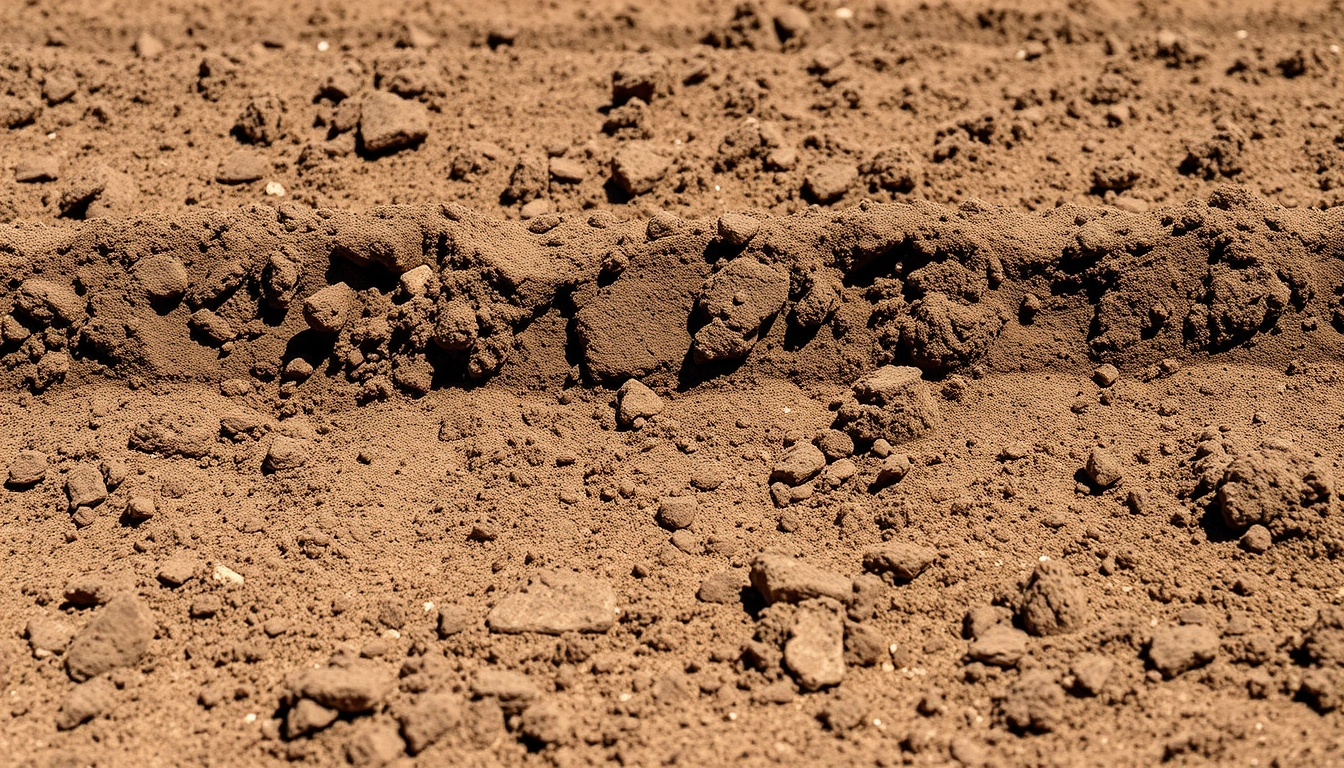
Most warning signs are physical, not theoretical. Saturated clay that sticks to boots and smears when squeezed is a very different animal from dense granular soil that breaks apart. New fill that looks uniform on top but changes texture at different depths is a red flag, especially if it was placed in layers under 8 inches with no documented compaction. And if a shovel or probe sinks much farther in one part of the lot than another, that unevenness matters more than the absolute softness.
Watch for soils that change volume with moisture, too. Expansive clay often cracks when dry and becomes slick and plastic when wet. Shrink-swell behavior can heave slabs, crack footings, and tilt frames. I would also keep an eye out for organics: black, spongy, root-heavy soil; buried topsoil; or decomposed plant matter. Those materials settle as they decay, which makes them poor support under a load-bearing foundation.
Water is the spoiler in many cases. A site that stays wet for more than 24 to 48 hours after rain, has seepage at cut slopes, or shows a high water table during digging deserves attention before footings go in. Poor drainage can turn marginal soil into a failure risk. Some reviews on stabilization and ground improvement stretch across months or years, not days, but study durations vary so much that there is no single number to use as a rule for a foundation site. For background on drainage and soil behavior, see the USDA NRCS Soil Quality resource and FHWA guidance on ground improvement.
How do I tell if my soil needs stabilization?
You tell by combining what you see on the surface with what the soil does when you disturb it, test it, and watch it after rain. No single clue is enough. A wet site with firm sandy subgrade may be fine; a dry site with hidden fill may not be. For how to tell if your soil needs stabilization before building a foundation, the key is pattern, not one isolated symptom.
Start with these checks in order.
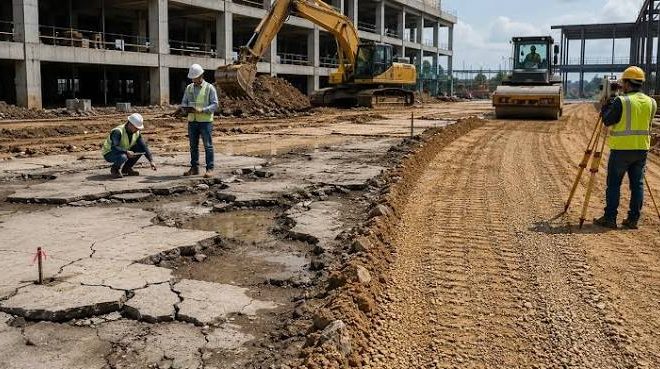
- Map water after a rain of at least 0.25 inch. Walk the lot within 24 hours and again after 48 hours, and mark where water ponds, where runoff cuts channels, and where the ground stays dark. Verify whether water drains away from the future foundation footprint. A problem is standing water near footings, seepage from a slope, or softening that lasts more than 2 days.
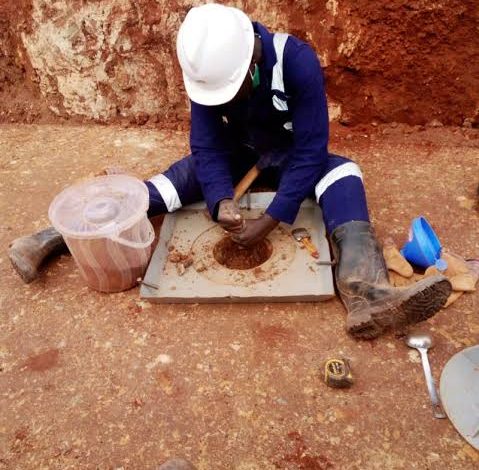
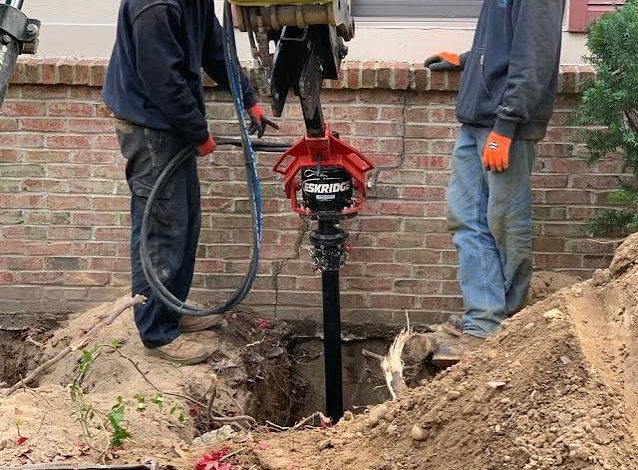
- Probe the soil at 4 to 6 spots. Use a hand auger, shovel, or steel rod to at least 24 inches if conditions allow. Verify whether the soil stays consistent by depth. A problem is a sudden change from dense soil to loose fill, trash, debris, roots, or organic material.
- Look for fill seams. Examine any cut edge, utility trench, or exposed bank for thin horizontal lines, mixed colors, or clods separated by loose layers. Verify whether the material was placed in lifts and compacted. A problem is uncontrolled fill, which often settles unevenly under foundation loads.
- Do a simple moisture judgment. Squeeze a handful. Clay that forms a ribbon or smear when rubbed is behaving plastically; loose sand that runs through fingers is behaving differently. Verify whether the soil changes character dramatically from dry to wet. A problem is highly plastic clay or soil that becomes slick and weak when moist.
- Check for shrink-swell clues. Look for surface cracks wider than a few millimeters in dry weather, curled slabs, tilted fence posts, or doors that stick seasonally on nearby structures. Verify whether movement tracks rain and drought. A problem is recurring heave and settlement, which usually points to expansive clay or inconsistent moisture.
- Measure slope and edge conditions. If the lot falls toward the foundation area, note the grade change over the first 10 feet. Verify whether runoff is directed away from the build area. A problem is concentrated flow toward the footing line or erosion that undercuts the surface layer.
- Compare planned load to soil quality. A one-story shed, a light wood frame house, and a heavy masonry wall do not load soil the same way. Verify whether the foundation design will spread load enough for the site. A problem is a heavy structure on marginal soil, especially if the footprint is small or the footings are shallow.
- Ask for a geotechnical report when the site shows more than one warning sign. A report can include borings, lab tests, and recommendations for compaction or treatment, but a qualified geotechnical professional should interpret it for your site. Verify whether the engineer identifies native soil, fill, groundwater, and allowable bearing assumptions. A problem is building from guesswork when the site already shows moisture, fill, or movement concerns.
The clue I trust most is not any one surface feature but a pattern: poor drainage, inconsistent layers, and visible movement together. One muddy corner after a storm is common. Muddy ground plus buried debris plus seasonal cracking is a different story. For more on drainage and grading, see the EPA guidance on runoff control and the ICC resource on foundation drainage.
What soil problems are easy to miss before excavation starts?
The easy-to-miss problems are the ones hidden below the top 6 to 12 inches. A site can look level, grassy, and dry while still sitting on uncontrolled fill, buried topsoil, or a thin crust over weak clay. That is why a bare surface can fool people.
Old fill is the biggest blind spot. A lot may have been regraded years ago, and the top looks settled, but deeper layers may still be loose. If a previous owner dumped soil, rubble, or excavation spoil and then covered it, that material may compress under a foundation long after the build is done. Another blind spot is moisture trapped by hardscape. Driveways, retaining walls, and roof downspouts can push water into one zone while the rest of the yard looks normal.
Clay is another tricky one because it can look dry and firm on top and still be unstable at footing depth. Expansive clay does not need to be soft to be a problem; it needs to move with water. That movement can be slow enough to miss during a casual walk but strong enough to crack a slab over time. Soil reports often describe this with terms like plasticity index, Atterberg limits, or allowable bearing pressure. You do not need to compute those yourself, but if the report does not mention them on a questionable site, I would ask why.
Seasonal variation matters too. A lot of sites look better in a dry month than they do in spring. A site that drains slowly in March and June may be much safer than it appears in August, and the reverse can happen in drought. Near a slope, a creek, or a low spot where groundwater may rise, one inspection is not enough. A foundation is expected to last decades, not one weather cycle.
When should you stop and get a geotechnical engineer involved?
Stop your own screening and get qualified help when the soil shows signs that simple compaction or drainage fixes may not be enough. Missing those signs can lead to differential settlement, cracking, doors and windows that bind, or, in the worst cases, a foundation that needs major repair.
Standing water remains for more than 48 hours near the planned footprint: That means drainage is poor or the subgrade is staying saturated — get a geotechnical or civil review before excavation.
The site includes uncontrolled fill, buried debris, or mixed construction waste: That means support is unpredictable — do not pour footings until the fill is evaluated and, if needed, removed or stabilized.
The soil is visibly expansive clay or shows seasonal heave and cracking: That means moisture-driven movement is plausible — ask a qualified professional about soil treatment, drainage, or a different foundation system.
You find organic soil, peat, or spongy black material more than a thin top layer: That means the ground can settle as it breaks down — the usual answer is excavation and replacement or another engineered solution.
There is a slope, seepage, or evidence of lateral movement: That means the site may have stability issues beyond bearing capacity — do not rely on ordinary shallow footings alone.
The planned structure is heavy, narrow, or especially sensitive to movement: That means a small amount of settlement can matter more than on a light outbuilding — get a design review before finalizing the foundation.
I would also stop if a quick probe meets refusal at shallow depth in one place and drops into soft material in another. That kind of contrast usually means the site is not uniform enough for assumptions. A 10-foot-by-10-foot patch of good soil beside a weak zone is still a weak site if the footing crosses both.
Common mistakes people make, and what they cost
The first mistake is confusing dry surface hardness with real support. Dry crust can hide soft soil underneath. The cost is a foundation that performs badly as soon as rain returns. Better to check soil at depth, not just underfoot.
The second mistake is assuming all fill is bad or all fill is acceptable. Too simple. Engineered fill, compacted in controlled lifts and documented by test results, can work well. Uncontrolled fill is the problem. The cost of not distinguishing them is either unnecessary excavation or an unstable foundation. If you have fill, ask for the compaction record or a geotechnical opinion.
The third mistake is ignoring water because the lot “usually dries out.” A site that dries in summer may still be a problem in wet months. The cost is seasonal movement, softening, and loss of bearing. The better move is to correct grading, downspout discharge, and surface drainage before foundation work.
The fourth mistake is treating visible cracks as cosmetic. Surface cracking in soil can be a warning about shrink-swell potential or desiccation, especially in clay. The cost is underestimating movement. Pair the visual clue with probing and, if needed, professional testing.
The fifth mistake is building first and asking questions later. That is the most expensive path. Once a foundation is poured, soil correction gets harder and costlier. A few hundred dollars in proper investigation can save far more later if it prevents major rework, but the cost depends on region, access, and scope. In practice, that last shortcut is where budgets go sideways.
What should I check before deciding on stabilization?
Ask whether the real problem is the soil, the water, or the foundation design. Those three get tangled easily. A site may not need stabilization if the fix is better drainage; another may need stabilization even with good drainage because the soil itself is weak.
Before any final decision, I would want three things: a geotechnical report if the site is uncertain, a grading plan that moves water away from the foundation, and a foundation design matched to the soil conditions. On a straightforward site, a shallow foundation on competent native soil may be enough. On a questionable site, the report may recommend overexcavation and replacement, lime or cement treatment, or deep foundations. The wrong choice is usually the cheapest one up front.
A practical rule: if the site has only one mild warning sign and the soil is otherwise uniform, the answer may be “no stabilization, but fix drainage and confirm compaction.” If the site has two or more warning signs, especially fill plus wetness or clay plus movement, I would expect a professional to be involved. That is not alarmism; it is matching the foundation to the ground instead of hoping the ground behaves.
The standard approach also changes if you are working with a slab-on-grade, a crawlspace, or a basement, because each foundation type reacts differently to settlement and moisture. For related guidance, see the foundation design basics, soil testing overview, and site drainage pages.