Foundation performance on weak or treated soil
Last updated: October 21, 2026
Quick Answer: A foundation on weak or treated soil can work, but it usually needs a soil report, verified treatment, and the right system; in many residential cases, the decision comes down to whether settlement can be kept within about 1 inch or less over the life of the structure, and a geotechnical professional should confirm that. Weak or treated soil does not automatically mean a bad foundation, but it does mean the foundation needs the right system, the right drainage, and the right geotechnical design. The question is not “Can a slab work here?” It is “Which foundation type can tolerate this soil, and what soil treatment or deep support is needed to keep settlement, cracking, and moisture movement under control?” Consult a geotechnical engineer before finalizing the design, because the answer depends on site-specific conditions.
If you are building, buying, or fixing a house on clay, fill, peat, loess, or chemically stabilized ground, this guide to Foundation performance on weak or treated soil — The Complete Guide is for you. I write on foundation and site-performance topics with a geotechnical lens, so I pay attention to the part many generic articles skip: the soil report, not the slogan. For background, see the International Building Code foundation provisions and FHWA guidance on geotechnical design for foundations. IBC, FHWA
Key takeaways
- Weak or treated soil changes the foundation problem from “bearing capacity only” to “settlement control, moisture control, and load transfer.”
- Soil treatment can help, but it does not erase bad drainage, uncontrolled fill, or expansive clay.
- Shallow foundations work only when the treated layer is uniform, verified, and thick enough for the loads above it; otherwise, consult a geotechnical professional.
- Deep foundations, grade beams, and pier systems usually win when near-surface soil remains compressible, variable, or wet.
- The right answer depends on the soil report, the house load, groundwater, and how much movement the structure can tolerate.
- If the site is still unstable after treatment, the honest answer is often to redesign the foundation, not to hope the soil “settles in.”
What “weak” and “treated” soil actually mean for a foundation
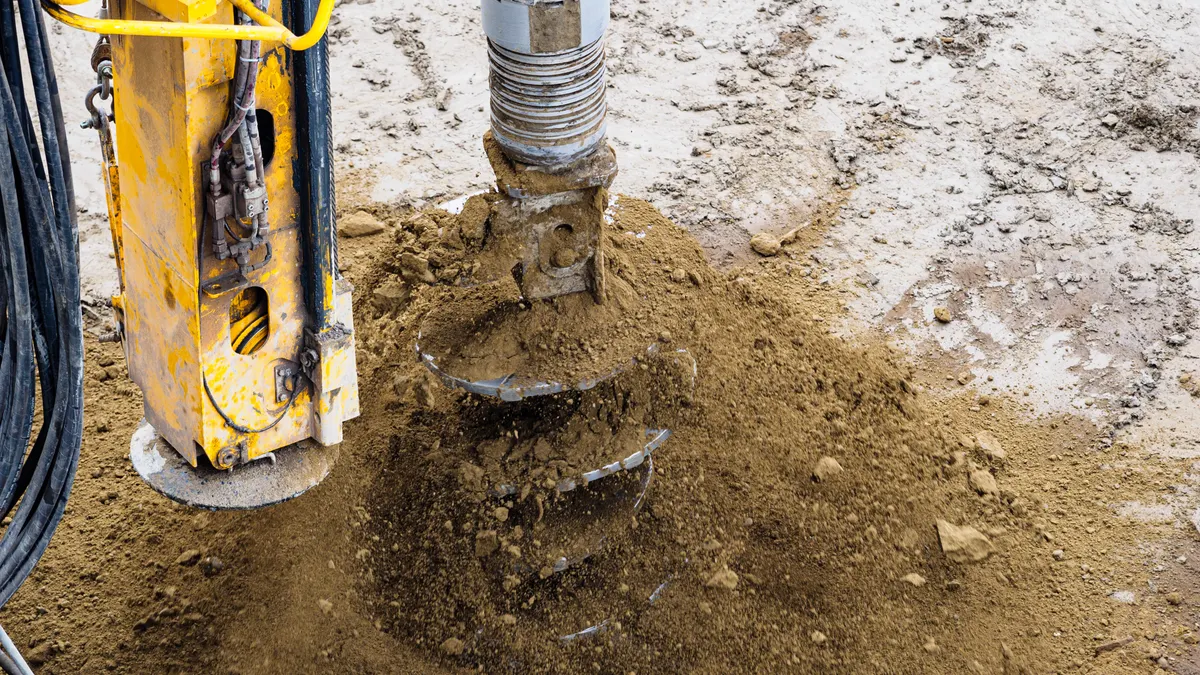
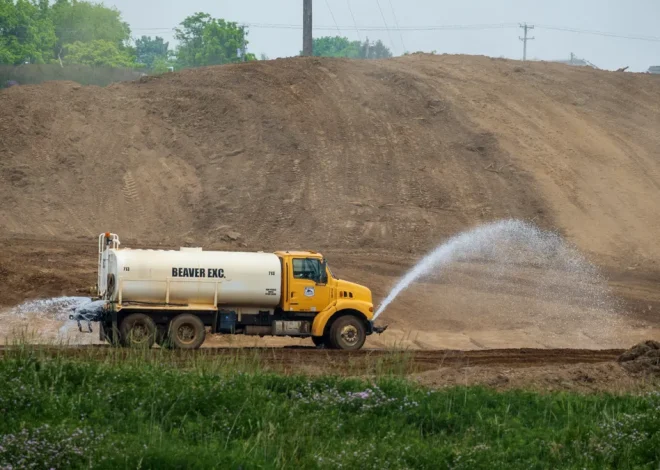
Weak soil means the ground cannot reliably support the structure without excessive settlement. Treated soil means the original ground has been modified in some way—lime stabilization, cement stabilization, compaction, replacement fill, geogrids, stone columns, or other ground improvement—to make it perform better. Those are not the same thing, and a treated site can still behave like weak soil if the treatment is shallow, inconsistent, or poorly documented; consult a geotechnical professional and verify the treatment method with a current report. FHWA
For foundations, the key issue is not just whether the soil can hold weight for a day. It is whether it can hold weight over years without differential movement. A footing on stiff, uniform soil may settle a little and still behave well. A footing on patchy fill or reactive clay can settle unevenly, which is what opens drywall cracks, jams doors, tilts porches, and breaks service lines. In practice, the difference between acceptable and unacceptable movement is often measured in fractions of an inch, not feet.
The problem gets sharper on soils with one or more of these traits:
- Low shear strength
- High compressibility
- High moisture sensitivity
- Large seasonal volume change
- Loose placement or undocumented fill
- Poor drainage or shallow groundwater
A foundation on treated soil is only as good as the treatment’s depth, quality control, and compatibility with the structure above it. A compacted pad that works for a one-story garage may be wrong for a two-story house with masonry veneer. A lime-treated subgrade that reduces plasticity may still not be enough if the native clay below it expands and contracts seasonally. In many cases, the safe next step is to ask a geotechnical engineer to confirm the design assumptions.
The first question is not “Is the soil bad?” It is “What failure mode matters here?” If the concern is settlement, you need bearing and stiffness. If the concern is expansive clay, you need moisture management and sometimes deep support that bypasses active zone movement. If the concern is loose fill, you need verification that the fill is dense and consistent, not just “treated” in a spec sheet. That is why site-specific boring data matters more than general rules of thumb. USGS
The real difference between shallow and deep foundations on weak soil
Shallow foundations win when treated soil is uniform and verified; deep foundations win when it is not. That is the simplest useful rule. A slab-on-grade, spread footing, or mat foundation can work on weak or treated soil only if the near-surface layer has enough stiffness and thickness to limit movement within the structure’s tolerance. Piers, piles, drilled shafts, and grade beams become the safer choice when the near-surface ground remains unreliable.
Here is the practical divide:
- Shallow systems spread load over a larger area. They are cheaper and simpler, but they depend heavily on the upper soil being consistent.
- Deep systems transfer load to a more competent stratum below the problem soil. They cost more and require more design, but they are much less vulnerable to poor surface conditions.
A treated subgrade can improve a shallow foundation’s chances in several ways. Cement or lime stabilization can increase strength and reduce plasticity. Compaction can raise density and stiffness. Soil replacement can remove the worst material near the surface. Stone columns or aggregate piers can improve drainage and load distribution. But each method has limits. If the treated zone is thin compared with the active soil below it, the foundation may still move with the untreated layer. If treatment quality varies from one part of the footprint to another, differential settlement becomes more likely, not less.
Deep foundations are not magic either. They need competent design, verified end-bearing or skin friction, and attention to negative skin friction if fill is settling around them. They also do not solve every soil problem by themselves. A pile-supported structure still needs grade beams, lateral stability, and moisture control around the site. But when the upper 6 to 20 feet of soil is the problem, bypassing it often produces the most predictable performance.
The crucial trade-off is cost versus certainty. Shallow systems are usually simpler and cheaper, but they ask the soil to cooperate. Deep systems ask the soil to cooperate less. If the site has highly variable fill, soft organic layers, or expansive clay with seasonal movement, certainty is usually worth the extra complexity.
How do you know if soil treatment is enough?
Soil treatment is enough only when the geotechnical report shows that the improved layer can carry the design load with acceptable settlement and that the untreated soil below will not create a new problem. That answer should come from a site-specific report, not from a contractor’s general confidence, and a geotechnical professional should review the final basis of design.
A good report usually addresses some combination of:
- Soil classification
- Moisture content or plasticity
- Estimated bearing capacity
- Expected total and differential settlement
- Depth of weak strata
- Groundwater or drainage conditions
- Recommended foundation type
- Construction notes for overexcavation, compaction, or proof-rolling
If the report says the near-surface soil has been treated, check what “treated” means in plain terms. Was the top 12 inches compacted, or was several feet of unsuitable soil removed and replaced? Was the treatment laboratory-confirmed, or is it based on field observations only? Was the treated area tested with a density test, plate load test, cone penetration test, or other acceptance method? The answer matters because “treated” without verification is just a promise.
I would treat three situations as warning signs:
- The report relies on assumptions instead of field testing.
- The treatment depth is shallow relative to the footing size or structural load.
- The soil below the treated layer is wet, soft, or expansive enough to continue moving.
A generic article often says soil stabilization “solves” weak ground. That is too neat. The honest version is that treatment can convert a site from high risk to manageable risk, but only if the treatment is engineered for the load and verified on site. For a small shed or detached garage, a treated pad may be adequate. For a house with heavy masonry, a sloped site, or known expansive clay, treated soil alone may not be enough.
If the report is missing, old, or vague, do not guess. Pay for a current geotechnical investigation. On weak ground, a few boring logs can save you from a foundation that costs far more to fix later. A current report from a geotechnical engineer is often the least expensive insurance on a difficult site.
Which foundation system performs best on weak soil?
Deep-supported systems with grade beams usually perform best on truly weak or variable soil, while reinforced mat foundations perform best when the soil is weak but reasonably uniform. That is the cleanest recommendation for a reader who wants a decision instead of a seminar.
The right system depends on the failure mode:
- If the soil is soft, compressible, or filled with uncontrolled material, deep support is usually the safest path.
- If the soil is weak but uniform, a mat or heavily reinforced slab can spread the load enough to control settlement.
- If the site has expansive clay, the foundation must also manage moisture changes, not just weight.
A mat foundation can be a strong choice when the entire footprint needs load sharing. It reduces stress concentrations and can tolerate modest variability better than isolated footings. It is especially useful where columns or walls would otherwise concentrate load into a weak subgrade. But a mat still relies on near-surface support, and on poor sites it can become expensive fast once thick reinforcement, edge beams, or soil prep are added. For that reason, the design should be checked by a geotechnical professional when soil conditions are uncertain.
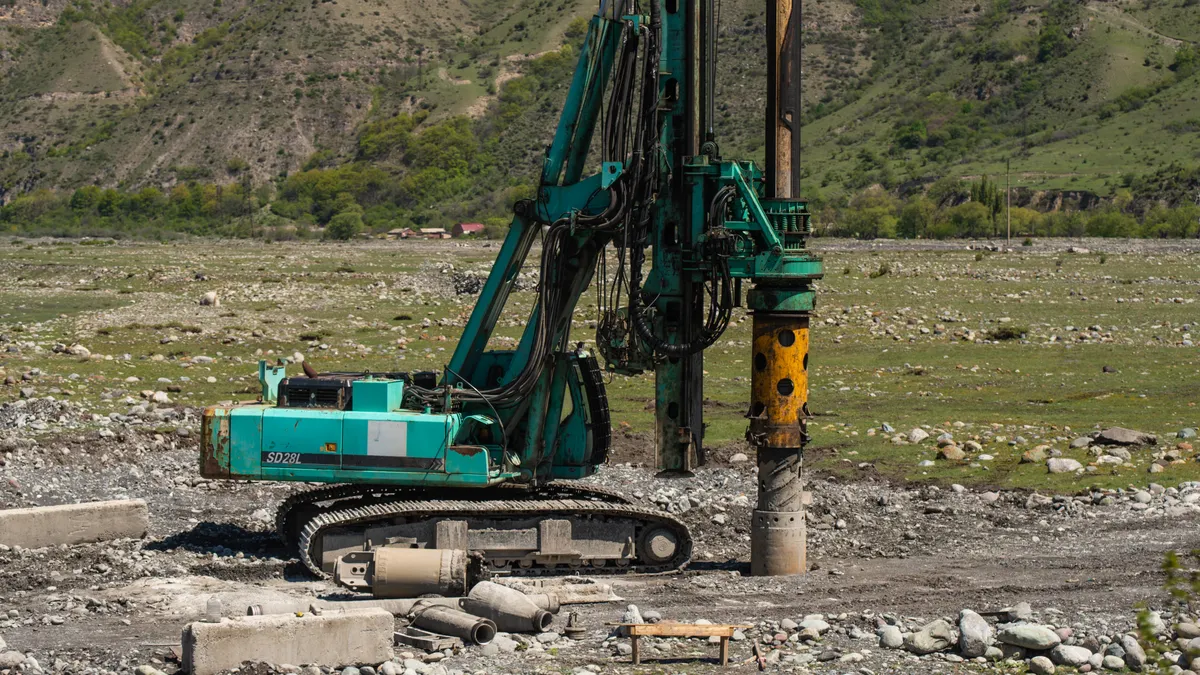
Pier-and-beam or drilled-pier systems work well where the competent soil or rock is deeper but reachable. The structure spans the weak zone instead of sitting on it. This is often the right call on sites with fill, peat, or highly variable clay. The drawback is lateral design complexity and cost. Piers must be tied together properly, and the crawlspace or underside needs moisture and pest control.
A reinforced slab-on-grade can work on treated soil if the treatment is substantial and uniform. It is common on residential sites where the soil can be improved by overexcavation, replacement, and compaction. The downside is that this approach has less forgiveness if the soil treatment varies across the slab or if the perimeter stays wetter than the interior.
Here is the main point: the best-performing foundation on weak soil is usually the one that reduces dependence on the weak soil the most. That is why deep support often wins on the worst sites, even when it costs more upfront. It is not the cheapest answer, but it is often the least regretful one.
Criteria | Shallow foundation on treated soil | Deep foundation / pier system | Winner for this condition
|—|—|—|—|
| Near-surface soil consistency | Works only if treatment is uniform | Much less dependent on the top layer | Deep foundation when soil varies across the footprint |
| Settlement control | Good on modestly weak but improved soil | Best when upper soils remain compressible | Deep foundation for soft or loose soils |
| Moisture movement resistance | Moderate, depends on drainage and soil type | Better because loads bypass active zone | Deep foundation on expansive clay |
| Construction complexity | Lower | Higher | Shallow foundation for simple, verified sites |
| Cost discipline | Usually lower upfront | Usually higher upfront | Shallow foundation when soil report is favorable |
| Tolerance for poor fill | Low | High | Deep foundation over undocumented fill |
| Suitability for heavy structures | Limited without major reinforcement | Strong | Deep foundation for masonry or multi-story loads |
| Repairability after movement | Moderate | Better, but repairs are still specialized | Deep foundation for high-consequence buildings |
| Dependence on drainage quality | High | Still important, but less critical to support | Deep foundation when drainage is hard to control |
The honest side-by-side: what each option gets right and wrong
Shallow foundations on treated soil win for budget-sensitive projects with controlled conditions. Deep foundations win for sites where the ground is still the weak link. That is the simplest honest comparison, and it should guide the choice before anyone starts drawing details.
A shallow foundation can be the right answer if the treatment is substantial, the soil report supports it, and the structure is not unusually sensitive to movement. This is where compacted replacement fill, stabilized subgrade, or a stiffened slab can perform well. The strengths are clear: less drilling, less material, faster installation, and simpler inspection. The weakness is also clear: the foundation still depends on the upper soil staying stable. If the treated layer is only a few feet thick and the native soil below it remains soft or expansive, movement can still happen beneath the improved zone.
A deep foundation is the better choice when the soil profile is ugly enough that shallow design becomes guesswork. It bridges across bad soil, which is why it often performs better over the long haul. The strengths are predictability, better settlement control, and better performance on variable sites. The weaknesses are equally real: higher cost, more design coordination, more specialized labor, and a bigger chance of surprises if subsurface conditions differ from the boring logs. A deep system also does not remove the need for drainage; it just makes the structural support less dependent on the topsoil.
The real decision is not “Which is stronger?” It is “Which failure is more expensive to accept?” On a modest residential project, a shallow foundation on verified treated soil can be perfectly rational. On a house built over soft fill or a wet clay basin, that same choice can be false economy. I would trust shallow treatment only when the report gives clear acceptance criteria and the site can actually meet them.
When to choose a mat slab, and when not to
A mat slab is the right answer when the site is weak but uniform and the structure can benefit from load spreading across the full footprint. It performs best when differential settlement is the concern more than absolute bearing capacity. That makes it a strong option for some residential, light commercial, and addition projects on improved ground.
A mat slab works by distributing loads over a larger area than isolated footings. That reduces stress peaks and can help the building tolerate moderate subgrade variability. If the soil has been treated with overexcavation and replacement, or if the upper layer has been stabilized and verified, a mat can be an efficient middle ground between cheap-but-fragile and expensive-but-bulletproof.
The weakness is that a mat slab still sits on the site. If the soil is highly compressible, saturated, or prone to large seasonal movement, the mat becomes a large expensive platform floating on a bad base. It may reduce cracking, but it will not eliminate it if the movement comes from deeper layers. On expansive clay, a mat can still heave or edge-lift if moisture changes are not controlled. On peat or very soft organic soil, a mat may simply be the wrong tool unless the weak material is removed or bypassed.
This is why mats are often misused. People hear “raft” or “mat” and think of a universal fix. It is not. It is a load-distribution strategy, not a substitute for a competent subgrade. I would choose a mat only when the geotechnical report shows that the improved soil has adequate stiffness and that the remaining settlement is within the structure’s tolerance. If that report is absent, the mat is a gamble with a bigger concrete bill.
What treatment methods improve foundation performance the most?
Soil replacement and verified compaction are the most straightforward ways to improve foundation performance, while deep ground improvement methods are better when the weak layer is thick. That is the practical answer, even though the “best” method depends on the soil type.
The most common methods include:
- Overexcavation and replacement with compacted engineered fill
- Lime stabilization for certain plastic clays
- Cement stabilization for some soils needing strength gain
- Stone columns or aggregate piers for soft compressible soils
- Geogrid reinforcement under fills and roadbed-like platforms
- Drainage improvements and moisture control around the foundation
Each method has a use case. Replacement and compaction are often the cleanest fix when the bad soil is shallow. They physically remove the worst layer, which is more reliable than trying to modify it in place. Lime stabilization is commonly used to reduce plasticity in certain clays, but it is not universal and depends on soil chemistry. Cement stabilization can increase strength, but it must be mixed and cured correctly. Stone columns and aggregate piers help transfer load and improve drainage in softer soils, but they require proper spacing and design.
The downside of treatment is that it can create overconfidence. A stabilized layer is not automatically a deep foundation. A compacted pad is not automatically suitable for a heavy structure. Treatment also needs verification. If a contractor cannot show how density or strength was checked, the word “treated” does not tell you enough.
The methods that work best are the ones matched to the specific soil problem. For a shallow layer of loose fill, removal and replacement may beat every chemical treatment. For expansive clay, drainage and moisture management may matter as much as the treated layer. For thick soft deposits, a deep system may outperform any surface treatment. A good design does not ask one method to do a job it cannot do.
Exception scenarios that flip the verdict
The verdict flips in a few specific cases, and those cases matter because they are where bad advice causes the most damage.
First, if the building is very light, a shallow treated foundation may be the smarter choice even on marginal soil. A small shed, detached garage, or single-story accessory structure may not justify deep support if the loads are low and the risk of minor movement is acceptable. That is a cost-to-consequence decision, not a structural triumph.
Second, if the weak soil is shallow and fully removable, soil replacement can beat deep foundations. If excavation can reach the problem layer and the site allows proper compaction of engineered fill, it may be more efficient to rebuild the bearing stratum than to bypass it.
Third, if the issue is mostly drainage rather than bearing, foundation performance can improve dramatically with grading, downspout discharge, subdrainage, and surface water control. On some clay sites, the foundation is blamed for a water problem that starts at the roofline and paved surfaces.
Fourth, if the structure is highly sensitive to movement—masonry veneer, brittle finishes, or precision equipment—the verdict moves toward deeper support even when the soil is only moderately bad. In those cases, lower movement tolerance matters more than the apparent strength of the treated layer.
These exceptions do not weaken the main rule. They sharpen it: the best foundation is the one that matches the real soil condition, the real load, and the real tolerance for movement.
The verdict: which foundation should you choose?
Choose a shallow foundation on treated soil if the geotechnical report shows uniform improvement, the weak layer is shallow, and the building is low-risk or light. Choose a deep foundation or pier system if the soil remains variable, compressible, wet, or expansive after treatment, or if the structure cannot tolerate differential movement. Neither if the site has uncontrolled fill, missing soil data, or active drainage problems that have not been solved first.
That is the clean decision. If the ground can be made consistent and verified, shallow design may be enough. If the ground cannot be trusted, bypass it. That is the whole game on weak or treated soil. If there is doubt, consult a geotechnical professional before construction starts.
What a good foundation decision looks like on paper
A good decision names the soil problem, the treatment method, the verification method, and the foundation type in the same set of documents. It does not say “improve soil and proceed.” It says what soil was encountered, what was done to it, how the work was checked, and what movement is still acceptable.
The best plans usually include:
- A recent geotechnical report
- A defined treatment depth
- A compaction or stabilization standard
- Drainage details for roof runoff and site grading
- Structural details that match the foundation type
- A clear statement of what happens if unsuitable soil remains
If those pieces are missing, the design is incomplete. Weak soil is not a place for vague confidence. It is a place for measured answers, because the foundation will only perform as well as the ground beneath it allows.
Drafted with AI; not yet reviewed by a person.